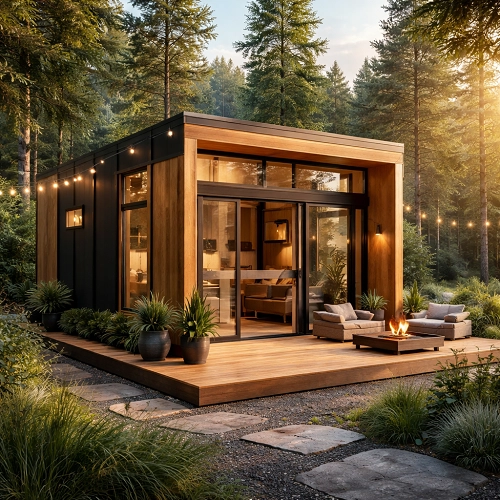
Prefab tiny homes have rapidly moved from niche concept to mainstream housing option, drawing interest from minimalists, sustainability advocates, and anyone looking for a more affordable and efficient way to live.
Prefab tiny homes are small residences—usually under 400 square feet—that are built off-site in a factory or workshop and then delivered to their final location for assembly or installation. Because the components are manufactured in controlled environments, quality and precision are often higher, and construction times much shorter, than with traditional stick-built homes.
These homes can be mobile (on wheels) or stationary (built on a foundation), and range from basic models with minimalist design to luxury options with full kitchens, bathrooms, and modern amenities.
Understanding how prefab tiny homes are built helps reveal why they’re efficient, scalable, and cost-effective.
There are several common prefabrication approaches:
Panelized Construction: Walls, floors, and roofs are built as flat panels in a factory, then assembled on-site.
Modular Construction: Larger sections or “modules” are built indoors and transported complete to the site.
Foldable & Expandable Designs: Some models are engineered to collapse for transport and expand once on site.
Each method affects transport logistics, assembly complexity, and cost.
Prefab tiny homes rely on modern materials chosen for strength, weight, and energy performance:
Structural Insulated Panels (SIPs): Sandwich panels that combine structural framing with insulation, offering excellent energy efficiency and moisture resistance.
Steel Frames: Provide strong, pest-resistant skeletons suitable for mobile tiny homes exposed to dynamic loading.
Timber Frames: Traditional wood framing remains popular for those seeking a natural aesthetic and ease of modification.
Advanced panels also incorporate fireproof and waterproof materials to meet safety and durability standards, protecting against moisture infiltration and environmental wear.
Standard modular units often range from 20- to 40-foot sections, making them easier to transport and assemble. Weight depends on materials and design, with lightweight solutions suited for portability and heavier, more insulated shells for permanent sites.
Tiny homes are subject to building codes like the International Residential Code (IRC) Appendix Q, which was introduced to help tiny houses meet minimum safety standards while allowing flexibility for compact living. This includes adaptations for low ceiling heights, safe loft access, and appropriate egress windows.
Prefab tiny homes are masterclasses in efficient space use:
Multi-functional furniture (e.g., fold-away beds, convertible tables) maximizes usability.
Built-in storage under floors, in stairs, and within walls reduces clutter.
Vertical space utilization, like loft sleeping areas, expands usable area without increasing footprint.
These strategies make tiny homes feel larger than their square footage might suggest.
One misconception is that prefab homes are one-size-fits-all. In reality:
Many builders offer layout choices and interior finishes.
Homeowners can often select appliances and fixtures, including energy-efficient systems or smart technology.
Exterior options like siding, roofing, and window placement can be tailored.
Custom touches help these small homes reflect personal lifestyles and functional needs.
Owning or placing a prefab tiny home involves navigating local rules:
Zoning classifications determine where tiny homes can be sited—residential lots, rural land, or recreational zones—with varying restrictions.
Whether a tiny home must be on a foundation, minimum size requirements, and whether it qualifies as permanent residence all vary by jurisdiction.
Certain tiny homes built to IRC or modular standards are easier to permit as full-time dwellings.
Before purchase, it’s crucial to research local building codes, minimum size rules, and permit requirements to avoid fines or forced removal.
Prefab tiny homes are generally more affordable than traditional homes, though total cost depends on many factors:
Base price of the prefab unit often ranges from entry-level kits (~$30,000) to luxury finished units exceeding $150,000.
Additional costs include site preparation, utility hookups, delivery fees, and permits.
Many buyers save 15–40% compared to on-site builds due to factory efficiencies.
Because of lower utility bills and property taxes, long-term ownership of a tiny home can also be financially attractive.
Prefab tiny homes offer several compelling benefits:
Smaller footprint means less material cost, reduced labor, and lower ongoing expenses.
Factory manufacturing and on-site assembly often shorten build times from months to just weeks.
Prefab homes often use sustainable materials, produce less waste, and are easier to power with energy-efficient systems like solar arrays.
Many models are designed to be moved or relocated, granting lifestyle flexibility unmatched in traditional housing.
Despite the attractive benefits, prefab tiny homes also have limitations:
Living in under 400 sq ft requires adaptation and a minimalist mindset.
Not all areas permit tiny home living, especially as permanent residences. It’s essential to verify before purchasing.
Some prefabricated models restrict major changes, especially structural ones.
Delivery can be complex, requiring permits for oversized loads and careful site access planning.
Prefab tiny homes represent one of the most compelling housing innovations of recent years—blending affordability, sustainability, and design efficiency in a compact, customizable package. Whether you’re seeking a full-time residence, a guest house, an off-grid retreat, or a creative rental space, prefab tiny homes offer versatile solutions for a broad range of needs. Understanding the technical, legal, and lifestyle implications ensures you make an informed decision and get the most value from this growing housing trend.